


Why is Vitamin B12 important?
Vitamin B12 is an essential micronutrient with several key roles in maintaining overall health and wellbeing. It helps to speed up chemical reactions in the body, aids in the production of red blood cells, is essential to maintaining a healthy nervous system, and helps to release energy from the food you eat.
Common symptoms and signs of a vitamin B12 deficiency include digestive problems, anaemia, a sore tongue, loss of appetite, muscle weakness, blurred vision, and fatigue. Some people may also experience neurological symptoms such as tingling in the hands or feet, poor memory, confusion, and personality changes.
Symptoms of deficiency are usually reversible with vitamin B12 administration; however, some effects may become irreversible if left untreated for a long time. It is important to speak with your healthcare professional if you have any concerns about a vitamin B12 deficiency.
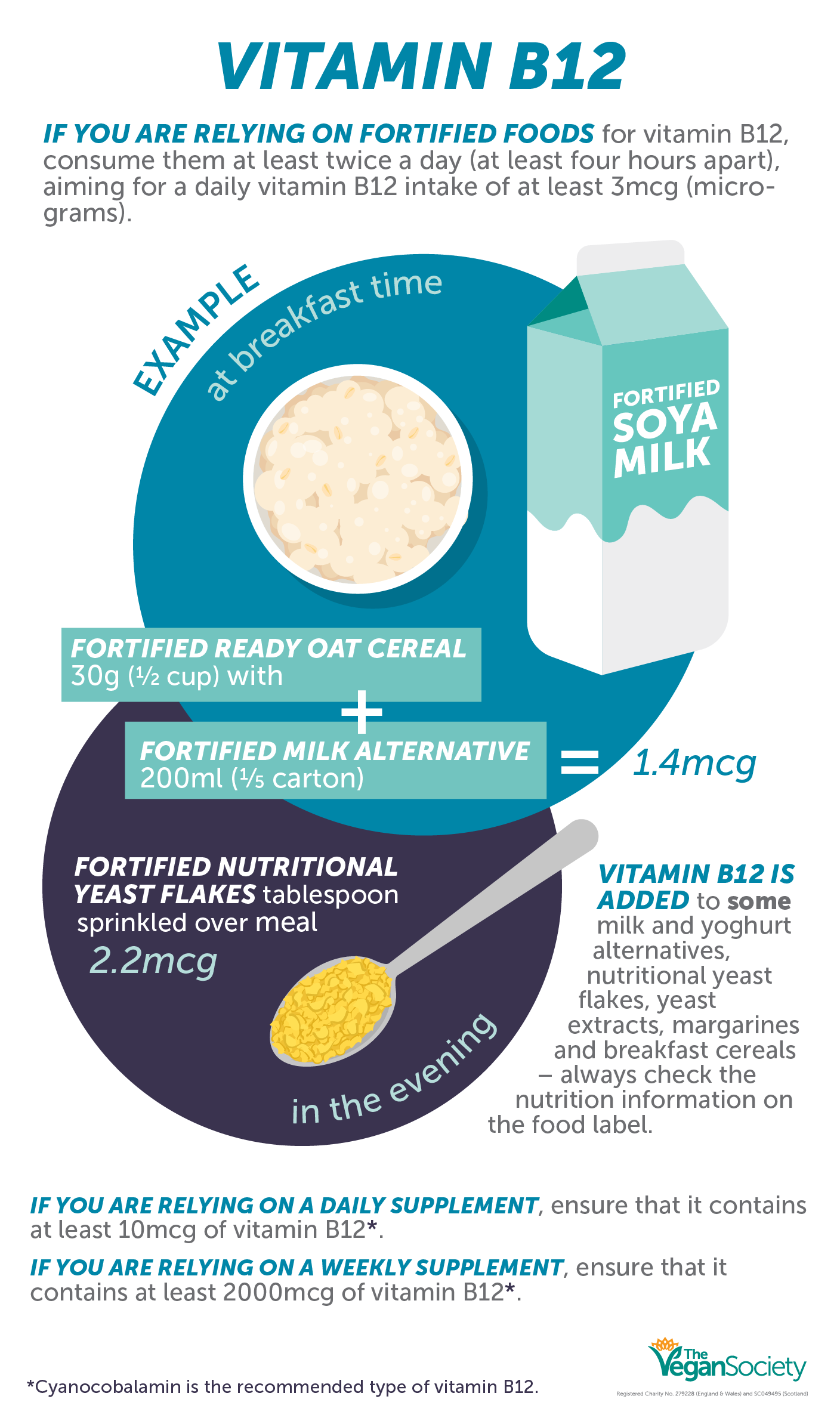
Click to view full infographic
How much B12 do you need?
The recommended daily requirement for vitamin B12 for adults in the UK is 1.5mcg (micrograms).
However, vitamin B12 is absorbed best in small, frequent amounts. This means the total amount you need depends on how often you consume it. That's why the recommended supplement dose is higher than the amount in fortified foods.
You could choose to:
- eat fortified foods two to three times daily to get at least 3mcg per day
- take a daily B12 supplement containing at least 10mcg
- take a weekly B12 supplement containing at least 2000mcg
It is perfectly fine to combine more than one of these options to meet your vitamin B12 needs. There is no established upper limit for vitamin B12 intake because any excess is safely excreted in urine. However, it is recommended to avoid taking supplements that provide more than 2000mcg daily.
Guidelines for children are outlined in our information about different life stages.
Which vegan foods contain Vitamin B12?
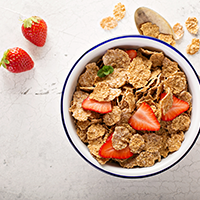
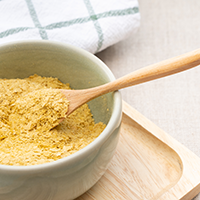
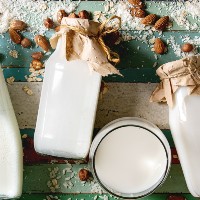
Fortified nutritional yeast is used by many vegans to increase their B12 intake and can be used in various vegan dishes. Fortified breakfast cereals, fortified plant milks, fortified plant spreads and yeast extracts can form part of a balanced vegan diet and are also sources of vitamin B12 for vegans.
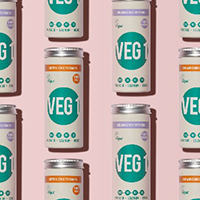
A note for people taking VEG 1
If you take The Vegan Society’s VEG 1 supplement, you can enhance vitamin B12 absorption by splitting the tablet and taking half with one meal and the other half at least four hours later. This method helps match the B12 levels typically found in omnivorous diets. However, splitting the tablet is not essential if you regularly consume fortified foods throughout the day.
Where do vegans get vitamin B12?
Vitamin B12 is made by microorganisms and is the only essential micronutrient that is not found naturally in any plant-based foods. Vegans can get vitamin B12 from:
- fortified foods
- a micronutrient supplement
Claims that vitamin B12 is found in certain plant foods like algae, spirulina, seaweed, sea buckthorn, or barley grass are unsupported. Some of these actually contain ‘false B12,’ which can disrupt B12 metabolism.
The only reliable way for people on a fully plant-based diet to consume vitamin B12 is to eat foods fortified with vitamin B12 or to take a supplement.
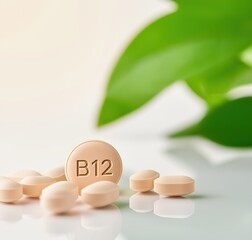
You may notice that supplements contain different types of vitamin B12. Cyanocobalamin is the recommended form of vitamin B12 because it is the most shelf stable, economical, widely available and well researched. Your body can convert cyanocobalamin into the two active forms of B12: methylcobalamin and adenosylcobalamin.
A very small percentage of people may have difficulty converting cyanocobalamin to methylcobalamin due to a genetic mutation affecting the responsible enzyme. If you suspect your B12 levels aren’t improving with cyanocobalamin supplements, consult your healthcare provider for personalised advice.
Vitamin B12 Vitamin B12 tips to take away
- Ensure that your vegan diet follows The Vegan Society guidelines about reliable vegan sources of vitamin B12, including fortified foods and/or taking a reliable supplement.
- We recommend that you seek advice from a health professional if you think you may have a vitamin B12 deficiency.
Further information
For more information on Vitamin B12, including the references used to create this webpage, go to our Vitamin B12 PDF download.
You might be interested in checking out the following webpages:
- What every vegan should know about vitamin B12 – an essential resource on vitamin B12 for a healthy vegan diet, endorsed by nutrition and health professionals.
- What’s a safe source of vitamin B12? – a detailed blog explaining why fortified foods and reliable supplementation are the safest and most effective sources of vitamin B12 for a balanced vegan diet.
- Nutrition overview – essential information to help you maintain a balanced and varied vegan diet, ensuring you receive all the key nutrients your body needs.
These are general guidelines about nutrition. If you have concerns about your diet, please talk to your doctor about seeing a dietitian. Discussing the use of supplements with a health professional will help to ensure that they are suitable for you.