


Why is zinc important?
Zinc is an essential mineral that the body needs for many important jobs. It contributes to normal DNA synthesis, normal cell division and the normal function of the immune system. It also helps the body make new cells and enzymes and plays a role in wound healing.
Zinc deficiency is uncommon in people eating a varied diet, but it can happen. Possible signs may include hair loss, poor wound healing, or getting infections more often. These symptoms can have many causes, so if you are concerned, speak to your GP.
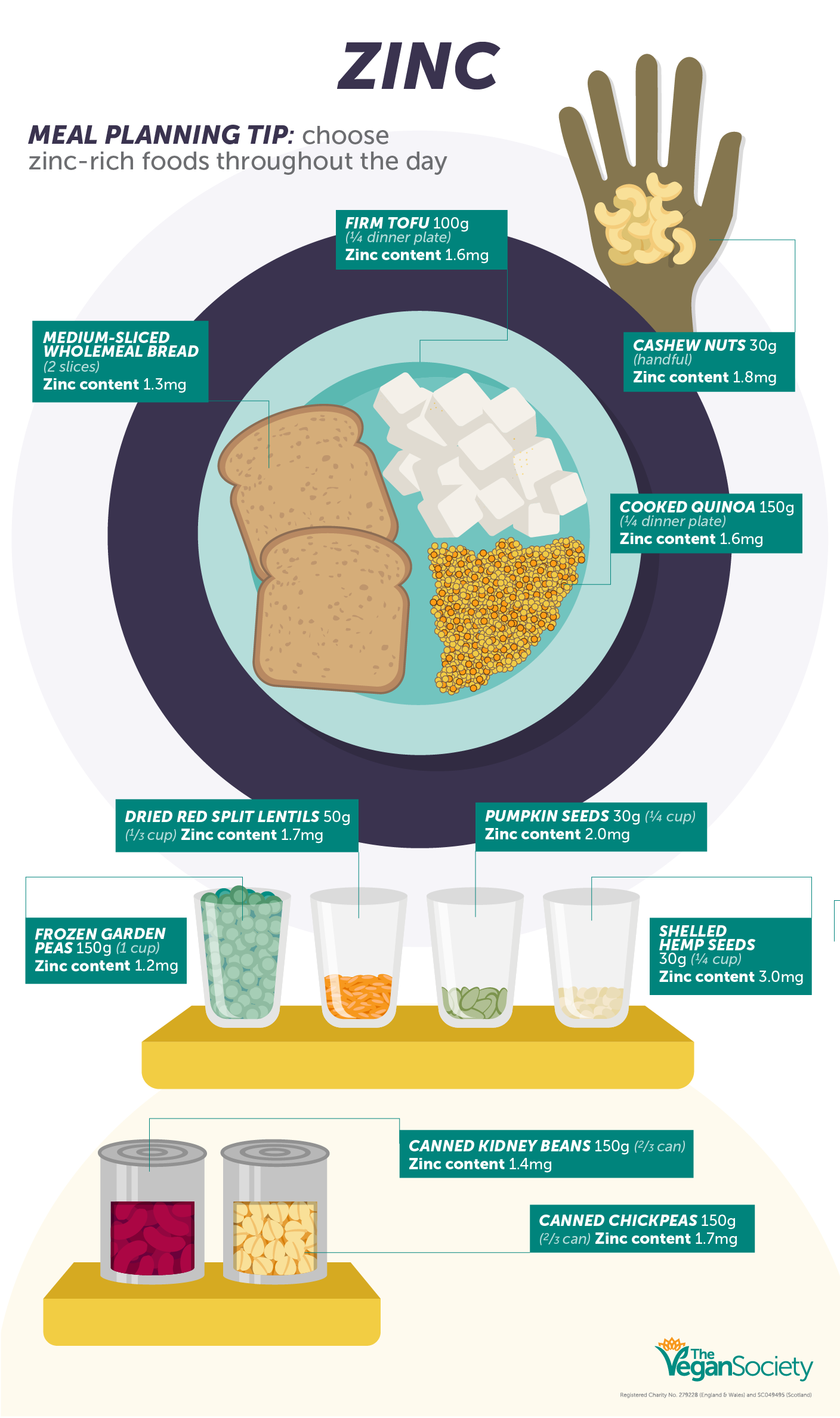
Click to view full infographic
How much zinc do you need?
In the UK, the recommended daily zinc intake for adults is:
- 9.5mg per day for men aged 19–64
-
7mg per day for women aged 19–64
Zinc needs change during breastfeeding. For more information, see our breastfeeding nutrition resources, or speak to a healthcare professional for advice that is right for you.
How can you get enough zinc as a vegan?
It is possible to get enough zinc from a varied and balanced vegan diet. The key is to include zinc-containing foods regularly throughout the day.
Zinc-rich vegan foods include:
- beans, lentils and chickpeas
- tofu, tempeh and soya mince
- nuts and seeds, especially pumpkin seeds, hemp seeds, sesame seeds, tahini, cashews and peanuts
- wholegrain foods, such as wholemeal bread, oats, brown rice and wholegrain pasta
-
zinc fortified foods, such as fortified breakfast cereals and fortified nutritional yeast
Many of these foods also provide other useful nutrients, including protein, iron and fibre.
Simple ways to include more zinc-rich foods include adding pumpkin or hemp seeds to porridge, blending cashews into sauces, spreading peanut butter or tahini onto toast, adding lentils to soups and pasta sauces, or using beans and chickpeas in curries, salads and stews.
Do vegans need a zinc supplement?
Many people can meet their zinc needs through a varied and balanced vegan diet.
However, a supplement may be recommended in some situations, for example if you are unable to meet your needs via food alone, you have a diagnosed deficiency, or you have a medical condition that affects absorption. If you are unsure, speak to your GP or a registered dietitian.
If you take a zinc supplement, the NHS advises adults not to take more than 25mg a day unless advised by a doctor. This is because taking too much zinc can be harmful.
If you take iron supplements or any regular medication, check with a healthcare professional before taking zinc supplements. Iron and zinc supplements can interact and zinc supplements may also interact with some medicines.
Many nutritious plant foods that contain zinc, including beans, lentils, wholegrains, nuts and seeds, also contain natural compounds called phytates. Phytates can bind to minerals such as zinc and reduce how much the body absorbs.
This does not mean you need to avoid these foods. Quite the opposite: they are valuable parts of a balanced vegan diet. It simply means that a few preparation methods can help make zinc more available.
You can support zinc absorption by:
- choosing yeast-leavened wholemeal bread
- soaking dried beans, lentils, chickpeas, nuts and seeds before cooking or using them, for example, soaking cashews before blending them into a cashew cheese sauce
- sprouting*
- choosing fermented foods, such as tempeh or sourdough bread
-
cooking beans, lentils and grains thoroughly
*If you sprout seeds at home, follow safe food hygiene practices. Sprouted seeds can carry a risk of foodborne illness if they are not handled safely (European Sprouted Seeds Association n.d.; Food and Agriculture Organization and World Health Organization 2023).
Garlic and onion may also help improve the availability of zinc from foods. They also add lots of flavour to meals and provide a source of prebiotic fibre.
Zinc tip to take away
Ensure that you make zinc-rich choices throughout the day.
Further information
For more information, including references used to create this web content, download our zinc PDF resource.
You might be interested to check out the following webpages:
- Nutrition overview – information to help you ensure that your overall diet is balanced and varied.
- Life stages – including pregnancy, breastfeeding and different age groups.
These are general guidelines about nutrition. If you have concerns about your diet, please talk to your doctor about seeing a dietitian. Discussing the use of supplements with a health professional will help to ensure that they are suitable for you.