


Why is selenium important?
Selenium is an essential nutrient. It is a key part of many important enzymes, substances that our bodies make to speed up chemical reactions. Selenium plays an important role in immunity, thyroid health and sperm production.

How much selenium do you need?
In the UK, the recommended daily selenium intakes for adults are 60 mcg (micrograms) for women and 75 mcg for men. Selenium recommendations are lower for children below the age of 15. Head to our Life stages web pages for more information on childhood selenium requirements.
How can Vegans get enough selenium?
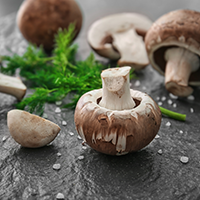
Dietary sources of selenium include brown rice, baked beans, mushrooms, sunflower and sesame seeds, tofu and oats. However, the selenium content of these foods varies significantly depending on the selenium content of the soil they were grown in. In the UK and Europe, soil selenium levels tend to be low, making these foods less reliable for meeting selenium needs.
Brazil nuts are an unusually rich plant-based source of selenium. Consuming 5-6 Brazil nuts daily can meet the selenium needs of older teenagers and adults. However, some researchers have raised concerns about relying solely on Brazil nuts for selenium due to the potential for exposure to barium and radium found in these nuts.
This means that taking a supplement that contains selenium, such as The Vegan Society’s VEG 1, may be the most reliable option.
Selenium tip to take away
-
Brazil nuts are a particularly rich plant-based source of selenium
-
Taking a supplement containing selenium is a reliable way to meet selenium needs
Further information
For a more detailed overview of the science behind diet and selenium, download our ‘selenium’ PDF resource
You may also be interested in checking out the following webpages:
- Nutrition overview – comprehensive guidance to help you maintain a balanced and varied healthy diet.
-
Life stages – detailed information on nutritional needs during pregnancy, breastfeeding, childhood, and other age groups.
The Vegan Society 2026. Review date: April 2029.
References
-
British Dietetic Association (2020). One Blue Dot Nutritional considerations: Selenium. One Blue Dot A Practical Guidance for Dietitians,https://www.bda.uk.com/static/330c4d05-a2f0-4cbb-b6695612f9369d56/Practical-guide-nutritional-considerations-re-SELENIUM.pdf (accessed April 16, 2026)
-
Committee on Medical Aspects of Food and Nutrition (1991). Dietary Reference Values for Food Energy and Nutrients for the United Kingdom London: HMSO.
-
Rayman MP (2008). Food-chain Selenium and Human Health: Emphasis on Intake. British Journal of Nutrition 100: 254–268
-
Thomson CD, Chisholm A, McLachlan SK & Campbell JM (2008). Brazil Nuts: an Effective Way to Improve Selenium Status. American Journal of Clinical Nutrition 87: 379–384