Vegan Society Dietitian, Amber Woodhouse, debunks common myths about vegan diets
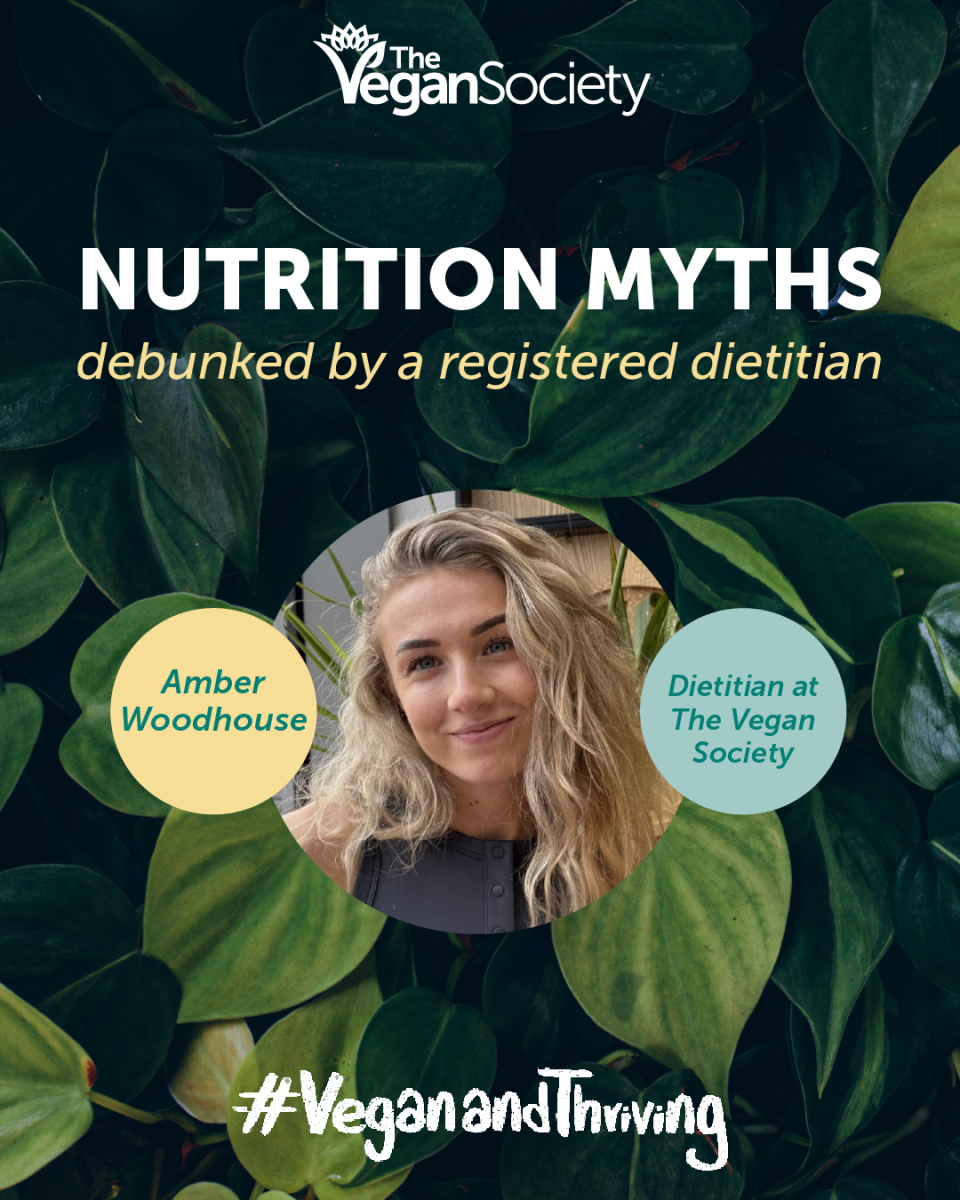 You have probably come across bold claims about vegan diets, such as ‘you won't get enough protein’ and ‘plant-based foods are ultra-processed’ – however the reality is usually much more nuanced. Our registered dietitian debunks some of the common myths about vegan nutrition and what the evidence actually says.
Myth 1: Major health organisations don’t support plant-based diets
Several reputable health organisations recognise that appropriately planned vegan diets can support good health.
The British Dietetic Association (BDA) states that appropriately planned vegan diets are nutritionally adequate and suitable for all life stages. The NHS also state “You can get the nutrients you need from eating a varied and balanced vegan diet including fortified foods and supplements”. The World Health Organization highlight that plant-based and vegan diets can be nutritionally adequate, while noting the importance of planning for nutrients such as vitamin B12, vitamin D, iodine, calcium, zinc and selenium.
Overall, public health authorities are largely aligned that vegan diets can be suitable and nutritionally adequate when planned well. And really, that same principle applies to any diet.
Myth 2: Vegan diets are nutritionally inadequate
While it is true that some nutrients need particular attention on a vegan diet, a vegan diet is not nutritionally inadequate simply because it excludes animal products. It simply means that, like any dietary pattern, a little planning is beneficial.
For example, evidence suggests that some plant-based eaters may have lower intakes of vitamin B12, vitamin D, iron, zinc, iodine, calcium and omega-3 compared to omnivores, particularly when fortified foods or supplements are not used. It is important to remember, however, that consuming a lower intake than another dietary group does not automatically mean they are deficient.
Additionally, nutritional gaps are not unique to vegans. Omnivorous diets may also fall short on nutrients such as fibre, poly-unsaturated fats, α-linolenic acid, folate, vitamins D and E, calcium and magnesium, while vegan diets are often associated with higher intakes of these.
Ultimately nutritional adequacy comes down to overall food choices, not the label attached to someone's diet.
Myth 3: Needing supplements means a vegan diet isn’t healthy
Supplementation is often framed as a weakness of vegan diets, but it is a normal part of modern nutrition.
Many everyday foods are fortified with vitamins and minerals. Breakfast cereals may contain added B vitamins and iron, fruit juices may be fortified with vitamin D and calcium and some breads may be fortified with nutrients too. Even animal feed may be supplemented with nutrients such as B12 or iodine.
Utilising fortified foods and supplements does not make a vegan diet inferior. Instead it simply means vegans are often obtaining certain nutrients directly, rather than indirectly through animal products. For many people, this makes following a nutritionally adequate vegan diet easier, while aligning with their ethical or environmental values.
Myth 4: You can’t get enough protein on a plant-based diet
For most people, getting enough protein on a vegan diet is absolutely achievable. Research generally shows that vegans typically meet recommended protein intakes so long as calorie needs are met.
For people with higher needs, such as athletes, older adults or those recovering from illness, meeting protein requirements is still possible, but food choices may need to be a little more intentional, prioritising protein-dense plant foods regularly across the day.
The idea that plant proteins need to be carefully combined at every meal is also outdated. Instead, eating a variety of plant protein sources throughout the day can provide all essential amino acids that the body needs.
Myth 5: Plant-based foods are all ultra-processed
The words ‘plant-based’ and ‘processed’ are often conflated to mean the same thing. However, this is not true, and processing level alone does not tell us everything about a food's nutritional value.
Higher intakes of some ultra-processed foods are associated with poorer health outcomes, but research suggests that associations may differ between food categories. For example, stronger disease associations have been observed with sugary drinks and animal-based processed products, while breads, cereals and some fortified plant-based drinks are not associated with disease risk.
Similarly, plant-based meat alternatives (PBMAs) can also vary widely. Some can be higher in salt, while others can provide more fibre and micronutrients, as well as comparable protein and less saturated fat than animal-based counterparts. At the same time, PBMAs can be useful for convenience, familiarity and helping people replace animal products.
For more nutrition tips and recipe inspiration, check out our nutrient pages and Vegan and Thriving campaign.
The views expressed by our bloggers are not necessarily the views of The Vegan Society.