


Why is protein important?
Protein gives our bodies structure as part of our muscles and bones. It is also used for fighting infection, speeding up chemical reactions, making hormones, transporting oxygen, growth and repair.
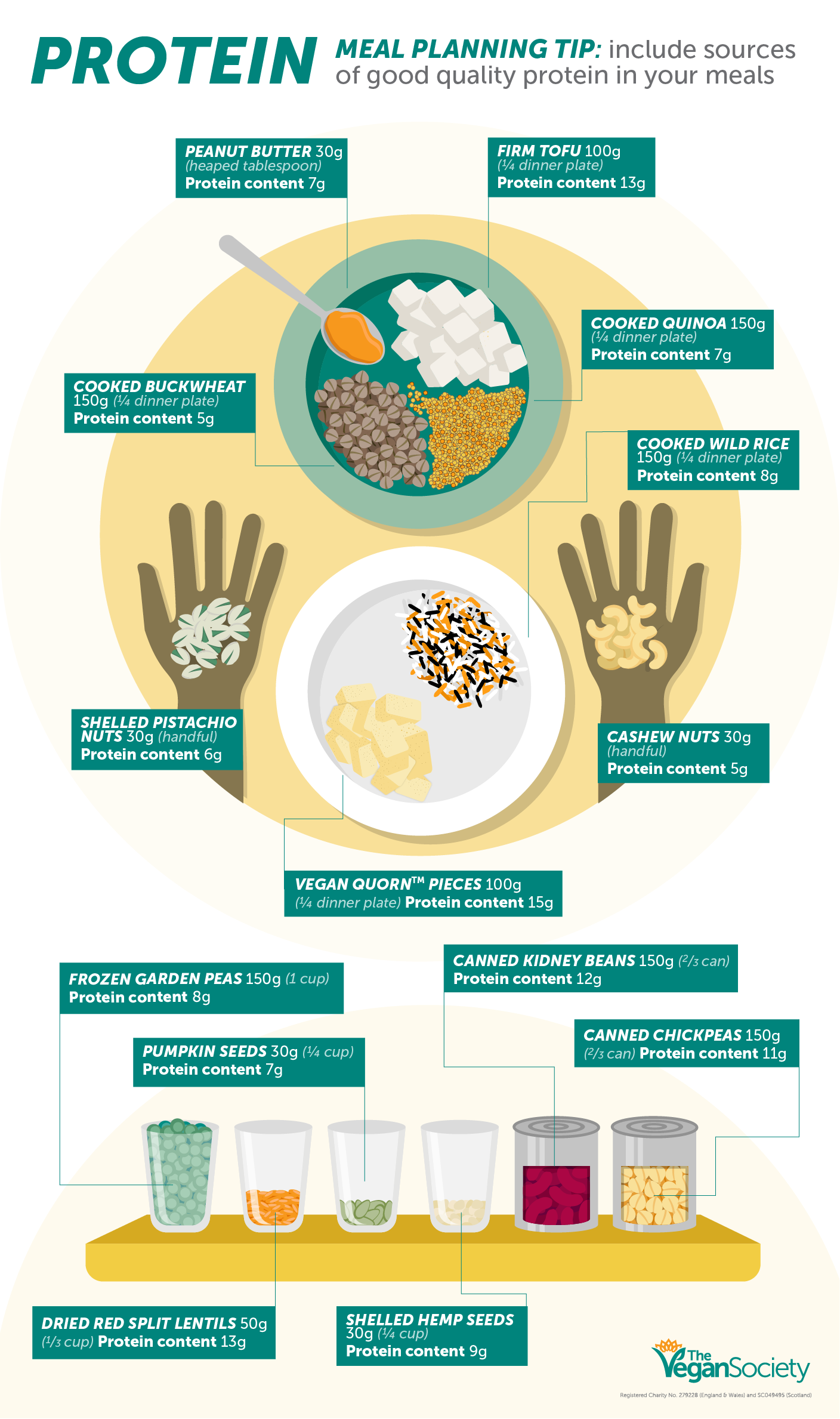
Click to view full infographic
How much protein do you need?
In the UK, a daily intake of 0.75 g of protein per kilogram of body weight is recommended for adults.1 For example, a person weighing 60 kg requires a protein intake of about 45 g per day. Some research indicates that vegans may require a higher protein intake because of the way our bodies handle plant proteins. A daily intake of 1 g per kilogram of body weight has been suggested.2
How can you get enough protein?
Most people do not need to work out their protein requirement and intake. If you are eating well and ensuring your meals are balanced, it is likely that you are getting enough protein.
Plant proteins contain all the essential amino acids – protein building blocks that cannot be made by our bodies. Although the quantity and quality of proteins vary, many plant-based foods make useful contributions to our overall intake of this nutrient. You can obtain a good mix of amino acids every day by enjoying a varied and balanced diet and ensuring your meals contain sources of good quality protein.
The infographic above provides examples of these foods, including suggested portion sizes.3–5
-
Protein-rich plant foods tend to provide useful amounts of iron and zinc, which are important nutrients to consider when planning a vegan diet.
-
Hemp seeds, chia seeds and ground linseed (flaxseed) can make useful contributions to our intakes of good quality protein, as well as providing essential omega-3 fats.
-
Meat substitutes based on pea, soya or QuornTM are usually high in protein, but some may contain too much saturated fat. Reading food labels can help you make healthier choices.
Protein tips to take away
- Ensure that your overall diet is balanced and varied.
- Check that your meals contain sources of good quality protein.
Further information
You might be interested to check out the following webpages:
- Nutrition overview – information to help you ensure that your overall diet is balanced and varied.
- Life stages – information about pregnancy, breastfeeding and different age groups, including older adults.
- Fuelling an active lifestyle – information for athletic vegans.
References
- Committee on Medical Aspects of Food and Nutrition. Dietary Reference Values for Food Energy and Nutrients for the United Kingdom London: HMSO; 1991
- Kniskern MA & Johnston CS. Protein Dietary Reference Intakes May Be Inadequate for Vegetarians if Low Amounts of Animal Protein Are Consumed. Nutrition 2011; 27 (6): 727–730
- Public Health England. Composition of Foods Integrated Dataset (CoFID) www.gov.uk/government/publications/composition-of-foods-integrated-dataset-cofid (accessed 12 October 2023)
- United States Department of Agriculture. FoodData Central https://fdc.nal.usda.gov/ (accessed 12 October 2023)
- Quorn. Quorn Vegan Chicken Pieces www.quorn.co.uk/products/vegan-pieces (accessed 12 October 2023)
These are general guidelines about nutrition. If you have concerns about your diet, please talk to your doctor about seeing a dietitian. Discussing the use of supplements with a health professional will help to ensure that they are suitable for you.